At Experian, our mission is to bring financial power to all. That means breaking down traditional boundaries, creating pathways for those historically left out of the financial system, and working alongside organizations that share our commitment to inclusion.
Credit Builders Alliance (CBA) is one of those partners.
For years, CBA has connected community-based nonprofits with the major credit reporting agencies, helping credit-challenged consumers to build or rebuild credit – often for the first time.
Our latest analysis done in partnership with CBA shows just how transformative this work can be. From unscored consumers reaching prime tiers to deep-subprime consumers seeing meaningful improvements, the data underscores a truth CBA has championed from the beginning: when people are given the opportunity to build credit, they use it to move forward.
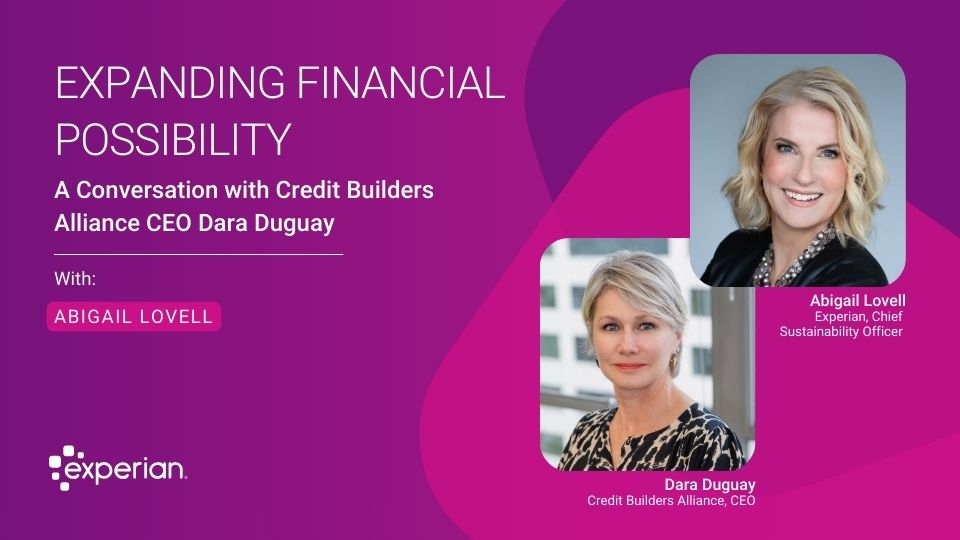
I recently had the opportunity to sit down with Dara Duguay, CEO of Credit Builders Alliance, to discuss these findings, the work her organization leads, and what’s needed to continue expanding access to fair, affordable credit for underserved communities.
Q1: For those who may be unfamiliar, what is Credit Builders Alliance? Who do you serve and what role do you play in the financial ecosystem?
Dara:
Credit Builders Alliance is a national nonprofit network made up of community-based organizations, nonprofit lenders, and financial capability providers. Our mission is to help low- and moderate-income individuals and families build credit as an asset and gain access to the financial mainstream.
We help nonprofits report loan repayment data to credit bureaus like Experian and we support organizations in strengthening their credit-building programs with training, tools, and technical assistance. Many of the consumers our member organizations serve start out with limited or no access to traditional financial products. Our work helps create pathways for them to demonstrate trustworthiness, build credit, and eventually qualify for mainstream financial opportunities.
Q2: Experian recently released an analysis highlighting the impact of CBA tradelines on consumer creditworthiness. What stood out to you in the findings?
Dara:
The data was incredibly affirming. Seeing that 70% of previously unscored consumers with a CBA tradeline reached prime or near-prime within a year highlights just how powerful inclusive credit reporting can be. It shows that when people with limited credit histories are given the opportunity to demonstrate responsible repayment, they make enormous progress.
I was also encouraged by the 48-point average increase among deep subprime consumers. These gains can dramatically change someone’s financial trajectory through lower borrowing costs, access to better financial products, and more stability for their families.
More broadly, this analysis reinforces what we see daily: thoughtful credit-building programs, when paired with education and support, create real and lasting change for consumers who need it most. It shows subprime consumers can perform when given the opportunities that they are often denied.
Q3: From CBA’s perspective, what approaches best help financial institutions better serve underserved consumers?
Dara:
A major opportunity is for financial institutions to embrace alternative data that reflects consumers’ real financial lives. Data plays such a vital role in lending decisions and expanding access to fair and affordable resources; we have to modernize our approach. Many people pay their rent, utilities, and telecom bills on time every month, yet historically these payments haven’t counted toward building credit.
We’ve seen incredible momentum around rent reporting, and the impact is significant –especially for people with thin or nonexistent credit histories. Rent is often a person’s largest monthly expense, and when that positive payment history is reported, it can quickly establish or improve credit. This progress has become even more meaningful with the Federal Housing Finance Agency’s approval of VantageScore 4.0 for use in mortgage underwriting. Because VantageScore 4.0 incorporates rental payment data where available, these reporting efforts can now play a more direct role in expanding fair access to homeownership for consumers who have historically been left out.
In addition, programs like Experian Boost show how empowering it can be when consumers have agency over the information included in their credit files. This feature allows people to get credit for utility, telecom, streaming, rent payments and many other things they are already doing responsibly. It’s a great example of meeting consumers where they are and acknowledging financial behaviors that have historically gone unrecognized.
Financial institutions should continue looking for ways to bring these types of innovations to more consumers, especially those overlooked by traditional models.
Q4: From your view, how do companies like Experian help advance financial inclusion?
Dara:
Experian plays an essential leadership role in expanding access to credit, especially through initiatives that rethink how data can work for consumers rather than against them. They’ve been a leader in modernizing the credit reporting industry. Programs like Experian Boost are great examples of that—giving consumers the option to add positive payment information and potentially improve their credit in a matter of minutes. It’s a simple concept, but it has opened doors for millions of people who previously struggled to gain traction in the system.
Similarly, Experian’s commitment to supporting rent reporting has been a major step forward. The ability for tenants to build credit through their rent payments, which is one of the most consistent household expenses, helps create equity for people who might not have access to traditional credit-building products.
And on a broader level, Experian’s willingness to partner with mission-driven organizations like CBA demonstrates a shared belief that credit is a gateway to opportunity. With analytical insights like our most recent study, Experian is helping validate the importance of inclusive reporting and informing the industry about the real-world benefits for underserved communities.
Q5: What misconceptions do you see about credit-challenged consumers, and what should the financial industry understand?
Dara:
One of the biggest misconceptions is that people with limited or poor credit histories lack financial discipline. In reality, many of them pay significant bills, including rent, utilities, childcare and more, on time every month but simply don’t receive credit for it in the traditional scoring system.
Another misconception is that credit building loans or other community-based nonprofit lender products don’t make enough of a difference to report. But as this analysis shows, they absolutely do. Even a single tradeline can serve as a bridge toward greater financial stability.
The industry should recognize that credit-building is a foundational tool for economic mobility, and millions of people need better access to programs that support it.
My conversation with Dara reinforces what makes Credit Builders Alliance an essential component of the financial ecosystem: their work is grounded in equity, powered by community, and focused on creating lasting pathways to economic mobility.
At Experian, we are proud to stand alongside CBA as a partner in expanding inclusive credit reporting, advancing responsible use of alternative data, and ensuring consumers have more control and visibility over their financial futures. The insights from our collaborative analysis make one thing clear: when people are given the chance to demonstrate their financial capabilities, they do. And together, we can make that chance available to millions more.
If you’re interested in learning more about Credit Builders Alliance, their mission, and the powerful work they’re leading to expand financial opportunity, I encourage you to visit creditbuildersalliance.org. Whether you represent a nonprofit, a financial institution, or simply want to understand how credit-building strengthens communities, CBA offers resources, tools, and programs that make a meaningful difference.
Together, we can continue to open doors, unlock potential, and bring financial power to all.